Tuesday, 7 June 2011

SIRKALI - BRAHMAPUREESWARAR TIRUKKOVIL

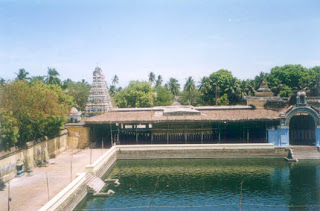
Brahmapureeswarar Temple is a Shiva shrine located at Seerkazhi (also, Sirkali) in Thanjavur District. The presiding deity here is Brahmapureeswarar and the goddess, Thirunilainayaki. There are other deities called Tiruthoniyappar and Sattanathar. The temple has four tall gopurams (tpwers)on each side with a high boundary wall. The temple has a theertham known as Brahma theertham. Many saints like Sambandar, Appar and Sundarar have sung in praise of this temple and its deity.

This ancient shrine is an integral part of the popular big Sivan Tirukkovil built to perpetuate great events, visualising the glory of Lord Siva.




According to tradition, Lord Maha Vishnu after sending Bali Chakravarti to the nether world grew a little bit arrogant and moved about with pride. Not commendable in a way ! Does this bring honour to Him ? No. It is unbecoming on the part of a person of His status and powers. Apprehending unpleasant consequences, Siva assumed the form of hunter and humbled the pride making Him His target. It worked. Later penitent Vishnu requested the Lord to settle down here and wear the dear skin as mantle and bone as mace in token of the episode occurred; for they symbolize egoism and maya, which were subdued by His arrow. He agreed. So Lord Siva is called Sattanathar - Lord of the skin coat. As this happened here, it was deemed holy, and so a temple was constructed. It is called Brahmapureeswarar Tirukkovil. By royal patronage, it grew up into a major shrine of great importance. The Chola emperor Vira Rajendra and Venkatadevaraya of Vijayanagara empire diverted huge sums from their treasures to glorify it. It contains in its compound besides this, the famous Tirugnanasambandar's shrine next to Mother Parvathi's shrine. There is one more shrine for Uma Maheswar shrine in the first floor. It too has a long legend.

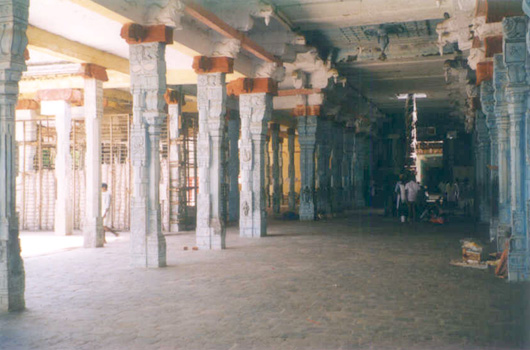
This Sattanathaswamy temple enshrining a Swayambhu linga lies in the heart of town., The spacious courtyards housing the three different shrines are enclosed by a high compound wall with four entrances. The principal deities adored are Brahmapureeswar, Tirugnana Sambandar and Tirunilai Nayaki  - the local name of Mother Parvati and they are enshrined in three separate shrines each with a prakara and many Mandapams. The beautiful statues of Uma and Maheswar sculptured masterly are installed in a spacious shrine on the terrace. And they are extremely impressive. The image of Sattanathar is installed in a separate narrow niche, and to avail the darsan, one has to go bending head. There is a staircase on the northern side, taking the devotees to the top for Darshan. The terrace is called Tiruthonimalai, named for its boat shape and it too has a legend interesting.
It lies 30 km off Chidambaram enjoying bus and train conveniences.

SIRKALI - BRAHMAPUREESWARAR TIRUKKOVIL

Brahmapureeswarar Temple is a Shiva shrine located at Seerkazhi (also, Sirkali) in Thanjavur District. The presiding deity here is Brahmapureeswarar and the goddess, Thirunilainayaki. There are other deities called Tiruthoniyappar and Sattanathar. The temple has four tall gopurams (tpwers)on each side with a high boundary wall. The temple has a theertham known as Brahma theertham. Many saints like Sambandar, Appar and Sundarar have sung in praise of this temple and its deity.

This ancient shrine is an integral part of the popular big Sivan Tirukkovil built to perpetuate great events, visualising the glory of Lord Siva.


According to tradition, Lord Maha Vishnu after sending Bali Chakravarti to the nether world grew a little bit arrogant and moved about with pride. Not commendable in a way ! Does this bring honour to Him ? No. It is unbecoming on the part of a person of His status and powers. Apprehending unpleasant consequences, Siva assumed the form of hunter and humbled the pride making Him His target. It worked. Later penitent Vishnu requested the Lord to settle down here and wear the dear skin as mantle and bone as mace in token of the episode occurred; for they symbolize egoism and maya, which were subdued by His arrow. He agreed. So Lord Siva is called Sattanathar - Lord of the skin coat. As this happened here, it was deemed holy, and so a temple was constructed. It is called Brahmapureeswarar Tirukkovil. By royal patronage, it grew up into a major shrine of great importance. The Chola emperor Vira Rajendra and Venkatadevaraya of Vijayanagara empire diverted huge sums from their treasures to glorify it. It contains in its compound besides this, the famous Tirugnanasambandar's shrine next to Mother Parvathi's shrine. There is one more shrine for Uma Maheswar shrine in the first floor. It too has a long legend.

This Sattanathaswamy temple enshrining a Swayambhu linga lies in the heart of town., The spacious courtyards housing the three different shrines are enclosed by a high compound wall with four entrances. The principal deities adored are Brahmapureeswar, Tirugnana Sambandar and Tirunilai Nayaki  - the local name of Mother Parvati and they are enshrined in three separate shrines each with a prakara and many Mandapams. The beautiful statues of Uma and Maheswar sculptured masterly are installed in a spacious shrine on the terrace. And they are extremely impressive. The image of Sattanathar is installed in a separate narrow niche, and to avail the darsan, one has to go bending head. There is a staircase on the northern side, taking the devotees to the top for Darshan. The terrace is called Tiruthonimalai, named for its boat shape and it too has a legend interesting.
It lies 30 km off Chidambaram enjoying bus and train conveniences.


For performing pooja contact us in doshanivarthi@gmail.com
or 
09487388509

This week

June 8 : Alwar thirunagaril Garuda sevai.

June 9 : Sivakasi Wisvanathar ther.

June 10 : Mathuranthakam Kothandasami Urchavam starting.

June 12 : Thiruvadanai, Kaliyar Koil kali therottam.

June 13 : Vaikasi visakam. 

This week

June 8 : Alwar thirunagaril Garuda sevai.

June 9 : Sivakasi Wisvanathar ther.

June 10 : Mathuranthakam Kothandasami Urchavam starting.

June 12 : Thiruvadanai, Kaliyar Koil kali therottam.

June 13 : Vaikasi visakam. 

Friday, 3 June 2011

Palani Murugan temple

The Hill Temple of Palani is one of the most famous temples of Murugan in India. It is located in the town of Palani, 100 km southeast of Coimbatore and a similar distance northwest of Madurai, and in the foot-hills of the eponymous Palni Hills. At its foot is the Temple of Thiru-avinan-kudi, one of the Arupadaiveedu.


Sage Narada once visited the celestial court of Lord Shiva at Mount Kailash to present to Him a fruit, the gyana-pazham (literally, the fruit of knowledge), that held in it the elixir of wisdom.
Upon Lord Shiva expressing his intention of dividing the fruit between his two sons, Ganesha and Karthikeya, the Sage counselled Him against cutting it. Thereat, He decided to award it to whichever of his two sons first circled the world thrice. Accepting the challenge, the Lord Karthikeya started his journey around the globe on his sacred bird, the peacock.
However, Lord Ganesha, who surmised that the world was no more than his parents Shiva and Shakti, circumambulated them. Pleased with their son's discernment, Lord Shiva awarded the fruit to Lord Ganesha. When the Lord Subrahmanya returned, he was furious to learn that his efforts had been in vain. In deep dudgeon, he decided to leave Mount Kailash, and take up his abode in a place where the land and people would be unequivocally his and for him. Thus, it was that He came to what is today known as Palani, a name derived from the manner of His Parents trying to mollify him and prevail upon him to return to Kailash - Gnana Pazham Nee appa (Tamil for "You are the fruit of wisdom sire")and thus, implying that being the embodiment of wisdom, he had no need for the fruit. Thus, being the abode of wisdom, the place took on its master's name - Pazham Nee or Pazhani, anglicised as Palani.


Going by legend, the idol of the Lord Muruga in Palani , was created and consecrated by the Sage Bhogar, one of Hinduism's eighteen great ascetics (siddhas), out of an amalgam of nine poisons or navapashanam. The legend also holds that, since it was a quick-setting paste, the sculptor had to work very rapidly to chisel its features, but that he spent so much time in creating the exquisitely beatific face, he did not have time to bestow but a rough grace upon the rest of the body, thus explaining the contrast between the artistic perfection of the face and the slightly less accomplished work upon the body.
A shrine to Bhogar exists in the southwestern corridor of the temple, which, by legend, is said to be connected by a subterranean tunnel to a cave in the heart of the hill, where Bhogar continues to meditate and maintain his vigil, with eight idols of the Lord.

Another legend holds that the idol, after centuries of worship, fell into neglect and was suffered to be engulfed by the forest. One night, Cheraman Perumal, a King of the Cheras, who controlled the area between the second and fifth centuries A.D., wandered from his hunting party and was forced to take refuge at the foot of the hill. It so befell, that the Lord Subrahmanyan, appeared to him in a dream, and ordered him to restore the idol to its former state. The king, thereat, awakening, commenced a search for the idol, and finding it, constructed the temple that now houses it, and re-instituted its worship. This is commemorated by a small stela at the foot of the staircase that winds up the hill.


Going by legend, the idol of the Lord Muruga in Palani , was created and consecrated by the Sage Bhogar, one of Hinduism's eighteen great ascetics (siddhas), out of an amalgam of nine poisons or navapashanam. The legend also holds that, since it was a quick-setting paste, the sculptor had to work very rapidly to chisel its features, but that he spent so much time in creating the exquisitely beatific face, he did not have time to bestow but a rough grace upon the rest of the body, thus explaining the contrast between the artistic perfection of the face and the slightly less accomplished work upon the body.
A shrine to Bhogar exists in the southwestern corridor of the temple, which, by legend, is said to be connected by a subterranean tunnel to a cave in the heart of the hill, where Bhogar continues to meditate and maintain his vigil, with eight idols of the Lord.
Another legend holds that the idol, after centuries of worship, fell into neglect and was suffered to be engulfed by the forest. One night, Cheraman Perumal, a King of the Cheras, who controlled the area between the second and fifth centuries A.D., wandered from his hunting party and was forced to take refuge at the foot of the hill. It so befell, that the Lord Subrahmanyan, appeared to him in a dream, and ordered him to restore the idol to its former state. The king, thereat, awakening, commenced a search for the idol, and finding it, constructed the temple that now houses it, and re-instituted its worship. This is commemorated by a small stela at the foot of the staircase that winds up the hill.


The most esteemed form of worship at the temple is the abhishekam - anointment of the idol with oils, sandalwood paste, milk, unguents and the like and then bathing it with water in an act of ritual purification. The most prominent abhishekams are conducted at the ceremonies to mark the hours of the day. These are four in number - the Vizha Poojai, early in the morning, the Ucchikālam, in the afternoon, the Sāyarakshai, in the evening and the Rakkālam, at night, immediately prior to the temple being closed for the day. These hours are marked by the tolling of the heavy bell on the hill, to rouse the attention of all devotees to the worship of the lord being carried out at that hour. On a quiet day, the bell can be heard in all the countryside around Palani.
After the abhishekam, it is the practice to dress the idol of the Lord, in an act called alangaram, in one of several guises - the most common being the Raja, or king, the Vaitheekan, or priest, the Vedan, or hunter and the Aandi, or monk, which last is the most celebrated in Palani, because it is the nearest to the natural form the Lord assumed at Palani as an anchorite, having withdrawn from all the celestial riches of his father's court at Mount Kailash.
In addition to worship within the precincts of the temple, an idol of the Lord, called the Uthsavamoorthy, is also carried in state around the temple, in a golden chariot, drawn by devotees, most evenings in a year.

Besides regular services, days sacred to the god Subrahmanyan are celebrated with pomp and splendour every year, and are attended by throngs of devotees from all over South India. Some of these festivals are the Thai-Poosam, the Pankuni-Uththiram, the Vaikhashi-Vishakham and the Soora-Samharam.
Thai-Poosam, which is considered, by far, the most important festival at Palani, is celebrated on the full moon day of the Tamil Month of Thai (15 January-15 February). Pilgrims after first having taken a strict vow of abstinence, come barefoot, by walk, from distant towns and villages. Many pilgrims also bring a litter of wood, called a Kāvadi, borne on their shoulders, in commemoration of the act of the demon Hidumba who is credited by legend with bringing the two hills of Palani to their present location, slung upon his shoulders in a similar fashion. Others bring pots of sanctified water, known as theertha-kāvadi, for the priests to conduct the abhishekam on the holy day. Traditionally, the most honoured of the pilgrims, whose arrival is awaited with anticipation by all and sundry, are the people of Karaikudi, who bring with them the diamond-encrusted vél or javelin, of the Lord from His temple at Karaikudi.

Palani Murugan temple

The Hill Temple of Palani is one of the most famous temples of Murugan in India. It is located in the town of Palani, 100 km southeast of Coimbatore and a similar distance northwest of Madurai, and in the foot-hills of the eponymous Palni Hills. At its foot is the Temple of Thiru-avinan-kudi, one of the Arupadaiveedu.


Sage Narada once visited the celestial court of Lord Shiva at Mount Kailash to present to Him a fruit, the gyana-pazham (literally, the fruit of knowledge), that held in it the elixir of wisdom.
Upon Lord Shiva expressing his intention of dividing the fruit between his two sons, Ganesha and Karthikeya, the Sage counselled Him against cutting it. Thereat, He decided to award it to whichever of his two sons first circled the world thrice. Accepting the challenge, the Lord Karthikeya started his journey around the globe on his sacred bird, the peacock.
However, Lord Ganesha, who surmised that the world was no more than his parents Shiva and Shakti, circumambulated them. Pleased with their son's discernment, Lord Shiva awarded the fruit to Lord Ganesha. When the Lord Subrahmanya returned, he was furious to learn that his efforts had been in vain. In deep dudgeon, he decided to leave Mount Kailash, and take up his abode in a place where the land and people would be unequivocally his and for him. Thus, it was that He came to what is today known as Palani, a name derived from the manner of His Parents trying to mollify him and prevail upon him to return to Kailash - Gnana Pazham Nee appa (Tamil for "You are the fruit of wisdom sire")and thus, implying that being the embodiment of wisdom, he had no need for the fruit. Thus, being the abode of wisdom, the place took on its master's name - Pazham Nee or Pazhani, anglicised as Palani.


Going by legend, the idol of the Lord Muruga in Palani , was created and consecrated by the Sage Bhogar, one of Hinduism's eighteen great ascetics (siddhas), out of an amalgam of nine poisons or navapashanam. The legend also holds that, since it was a quick-setting paste, the sculptor had to work very rapidly to chisel its features, but that he spent so much time in creating the exquisitely beatific face, he did not have time to bestow but a rough grace upon the rest of the body, thus explaining the contrast between the artistic perfection of the face and the slightly less accomplished work upon the body.
A shrine to Bhogar exists in the southwestern corridor of the temple, which, by legend, is said to be connected by a subterranean tunnel to a cave in the heart of the hill, where Bhogar continues to meditate and maintain his vigil, with eight idols of the Lord.

Another legend holds that the idol, after centuries of worship, fell into neglect and was suffered to be engulfed by the forest. One night, Cheraman Perumal, a King of the Cheras, who controlled the area between the second and fifth centuries A.D., wandered from his hunting party and was forced to take refuge at the foot of the hill. It so befell, that the Lord Subrahmanyan, appeared to him in a dream, and ordered him to restore the idol to its former state. The king, thereat, awakening, commenced a search for the idol, and finding it, constructed the temple that now houses it, and re-instituted its worship. This is commemorated by a small stela at the foot of the staircase that winds up the hill.


Going by legend, the idol of the Lord Muruga in Palani , was created and consecrated by the Sage Bhogar, one of Hinduism's eighteen great ascetics (siddhas), out of an amalgam of nine poisons or navapashanam. The legend also holds that, since it was a quick-setting paste, the sculptor had to work very rapidly to chisel its features, but that he spent so much time in creating the exquisitely beatific face, he did not have time to bestow but a rough grace upon the rest of the body, thus explaining the contrast between the artistic perfection of the face and the slightly less accomplished work upon the body.
A shrine to Bhogar exists in the southwestern corridor of the temple, which, by legend, is said to be connected by a subterranean tunnel to a cave in the heart of the hill, where Bhogar continues to meditate and maintain his vigil, with eight idols of the Lord.
Another legend holds that the idol, after centuries of worship, fell into neglect and was suffered to be engulfed by the forest. One night, Cheraman Perumal, a King of the Cheras, who controlled the area between the second and fifth centuries A.D., wandered from his hunting party and was forced to take refuge at the foot of the hill. It so befell, that the Lord Subrahmanyan, appeared to him in a dream, and ordered him to restore the idol to its former state. The king, thereat, awakening, commenced a search for the idol, and finding it, constructed the temple that now houses it, and re-instituted its worship. This is commemorated by a small stela at the foot of the staircase that winds up the hill.


The most esteemed form of worship at the temple is the abhishekam - anointment of the idol with oils, sandalwood paste, milk, unguents and the like and then bathing it with water in an act of ritual purification. The most prominent abhishekams are conducted at the ceremonies to mark the hours of the day. These are four in number - the Vizha Poojai, early in the morning, the Ucchikālam, in the afternoon, the Sāyarakshai, in the evening and the Rakkālam, at night, immediately prior to the temple being closed for the day. These hours are marked by the tolling of the heavy bell on the hill, to rouse the attention of all devotees to the worship of the lord being carried out at that hour. On a quiet day, the bell can be heard in all the countryside around Palani.
After the abhishekam, it is the practice to dress the idol of the Lord, in an act called alangaram, in one of several guises - the most common being the Raja, or king, the Vaitheekan, or priest, the Vedan, or hunter and the Aandi, or monk, which last is the most celebrated in Palani, because it is the nearest to the natural form the Lord assumed at Palani as an anchorite, having withdrawn from all the celestial riches of his father's court at Mount Kailash.
In addition to worship within the precincts of the temple, an idol of the Lord, called the Uthsavamoorthy, is also carried in state around the temple, in a golden chariot, drawn by devotees, most evenings in a year.

Besides regular services, days sacred to the god Subrahmanyan are celebrated with pomp and splendour every year, and are attended by throngs of devotees from all over South India. Some of these festivals are the Thai-Poosam, the Pankuni-Uththiram, the Vaikhashi-Vishakham and the Soora-Samharam.
Thai-Poosam, which is considered, by far, the most important festival at Palani, is celebrated on the full moon day of the Tamil Month of Thai (15 January-15 February). Pilgrims after first having taken a strict vow of abstinence, come barefoot, by walk, from distant towns and villages. Many pilgrims also bring a litter of wood, called a Kāvadi, borne on their shoulders, in commemoration of the act of the demon Hidumba who is credited by legend with bringing the two hills of Palani to their present location, slung upon his shoulders in a similar fashion. Others bring pots of sanctified water, known as theertha-kāvadi, for the priests to conduct the abhishekam on the holy day. Traditionally, the most honoured of the pilgrims, whose arrival is awaited with anticipation by all and sundry, are the people of Karaikudi, who bring with them the diamond-encrusted vél or javelin, of the Lord from His temple at Karaikudi.

For performing pooja contact us in doshanivarthi@gmail.com
or 
09487388509

Rockfort Ucchi Pillayar Temple : Online pooja

Rockfort or Ucchi Pillayar koil, is a combination of two famous 7th century Hindu temples, one dedicated to Lord Ganesh and the other dedicated to Lord Shiva, located a top of a huge rock in Trichy, India. Geologically the 83m high[1] rock is said to be one of the oldest in the world, dating over 3 billion years ago, and mythologically this rock is the place where Lord Ganesh ran from King Vibishana, after establishing the Ranganathaswamy deity in Srirangam.


The Rock Fort temple stands 83m tall perched atop the rock. The smooth rock was first cut by the Pallavas but it was the Nayaks of Madurai who completed both the temples under the Vijayanagara empire[1].
The temple complex is composed of two parts: a Shiva temple (Thayumanaswamy) carved in the middle of the rock and a Pillayar (Ganesh) temple at the top portion of the rock[1]. The Shiva temple is the bigger one, housing a massive stone statue of Shiva in the form of Linga along with a separate sanctum for goddess Parvati. The temple is mystic in its nature with an awe-inspiring rock architecture. The Ganesh temple is much smaller with an access through steep steps carved on the rock and provides a stunning view of Trichy, Srirangam and the rivers Kaveri and Kollidam. Due to its ancient and impressive architecture created by the Pallavas, the temple is maintained by the Archaeological department of India.

Vibhishana, was the younger brother of the Asura King Ravana who ruled Lanka. Lord Rama in the epic of Ramayana rescues his wife Sita, who was kidnapped and held by Ravana, with the help of Sugriva and Hanuman defeated him. In this war, the moral and truth-abiding brother of Ravana, Vibishana aids Rama in his battle against his brother. Ultimately Rama wins the war and as a token of love, He gifts Vibishana a vigraham (idol for worship) of Lord Ranganatha, a form of Vishnu.

Vibhishana, though he supported Rama, was basically an Asura, hence the Devas (who are arch rivals to Asuras as per Hindu mythology) wanted to stop this idea of an Asura taking Lord's supreme form to his Kingdom. They request the help of the Remover of obstacles and God of learning , Lord Vinayaka and the Lord accepts the plan. Vibhishana, while on his back to his Kingdom, goes through Trichi, and wanted to take his bath in the river Kaveri and do his daily rituals. However, he is perplexed as the deity, once kept in land, can never be removed and has to be in that place forever.

As a solution, Vibishana tries to find someone to hold the deity while he was taking bath. He finds the Lord Vianayaka under disguise of a cowherd boy. As per the plan, when Vibishana is fully into water, Vinayaka takes the deity and keeps it firmly in sand, in the banks of kaveri. On seeing this, the angry Vibhishana chases the boy, to punish him, and boy keeps running and climbs over the rock near the Kaveri bank. Vibhishana finally reaches the boy and hits him on the fore-head of little boy who then reveals himself to be Vinayaga. Vibishana immediately apologizes and the Lord gives him his blessings and sends him off to Lanka. This is similar to the story Of Lord Ganesh in Gokarna with Ravana in the same Ramayana period.. Ref Gokarna
The place on which the Ranganathan deity was kept was later covered in deep forests, due to disuse and after a very long time, it is discovered when a Chola king chasing a parrot finds the deity accidentally. He then establishes the Ranganathaswamy temple, Srirangam as one of the largest temple complexes in the world. Meanwhile, the Pallavas built the Vinayaka temple and the Thayumanaswamy temple, in the rock which Vinayaka uses to escape Vibishana.

According to another mythology, a pregnant woman named Rathnavathi is nearing labor and she suffers in enormous pain as her mother who is to help her has not yet arrived. The pregnant women suffers alone and pleads to God. Then Lord shiva takes the form of her mother and helps her in the pregnancy. Thus, the Lord was praised as "Thayum Ana Swamy" (The Lord who could act like a Mother) and hence the temple began to be called as "Thayumanaswamy temple". Around 200 steps need to be climbed to reach the beautiful temple. The paintings on the ceiling is amazing. The structure of the temple shows the excellent art in olden days. The temple has many small shrines inside, but major shrines is for Lord Shiva, Goddess Parvati and Mahalakshmi.

For Online pooja booking contact us in doshanivarthi@gmail.com  or call us : 91 9487388509

Parthasarathy Temple : Online Pooja